
We flew into Johannesburg yesterday morning and spent a few hours in Soweto (south western township) the site of key efforts for freedom by many colored peoples. (Note that ‘colored’ is the preferred term of many South Africans.)


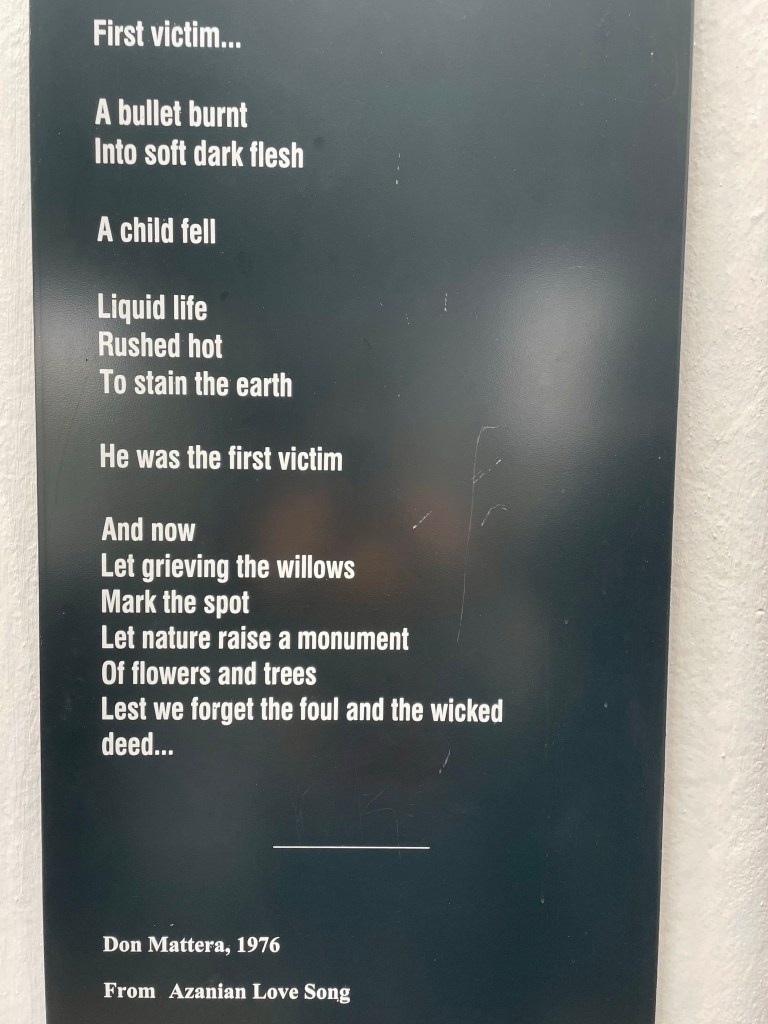
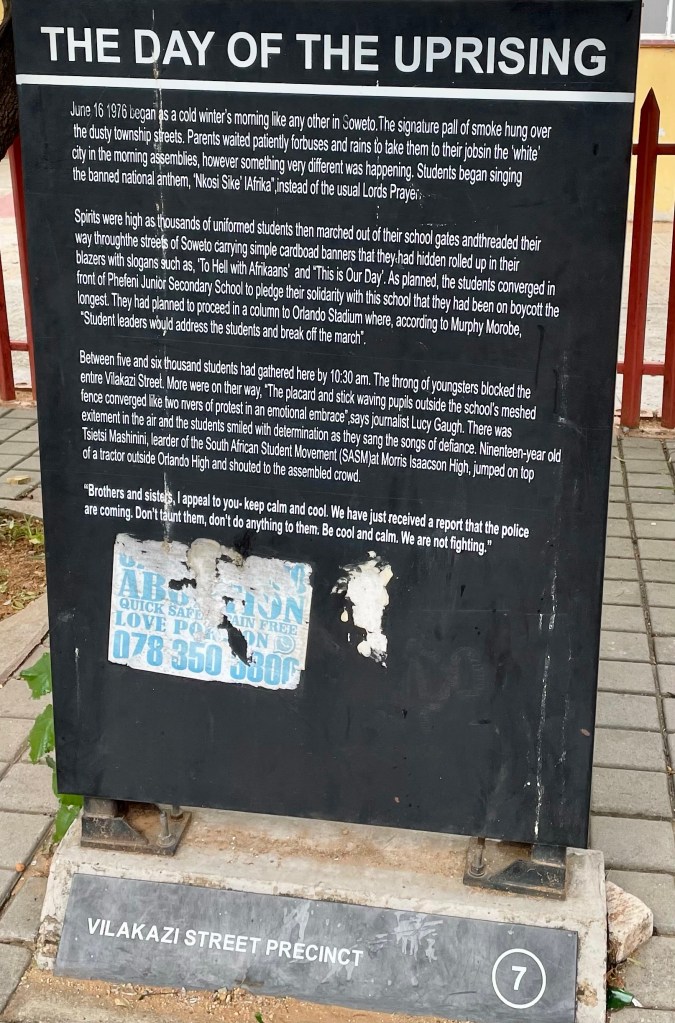
Upon arrival in Soweto, we met a local tour guide for a visit to the Hector Pieterson Museum. Hector Pieterson was a 12-year old boy who was killed during the student demonstrations in June 1976. The students were demonstrating for the right to continue learning in English. The government had mandated that education be conducted in the Afrikaans language instead.
[Please note that I am very new to this history, yesterday was the first time I’d heard of it. I will endeavor to tell the story properly. When I’m back home, I’ll double check the history and post corrections as necessary.]
The story is tragic and familiar: who started the escalation? Why such a violent response from the police to a peaceful demonstration of teenagers and children? How many died? What happened to the student leaders who were arrested and disappeared? Why hasn’t anyone been held to account for the atrocities? Etc. I think you get my point.
After touring the museum, we met with Hector Pieterson’s sister who shared her story from that day. She was 16, Hector was 12 when he died. She was a quiet spoken, gracious woman. It was impactful to hear from her personally and to see the locations where the events occurred

We then joined her on the “long walk to freedom”, the Nelson Mandela House. Both Mandela and Bishop Desmond Tutu lived in Soweto. Our guide pointed out the Tutu House, only a few blocks away.
I’m blogging from the van, and will lose signal soon, so stopping for now, Enjoy!
Categories: Uncategorized
 My Take, By Tamara
Thank you for sharing 😊