
My experience at Auschwitz was not the same as it might have been for someone without my background on the Holocaust and Auschwitz. I have studied (academically) and read much about the Nazi horrors of that time and so I already knew much about what transpired there. But seeing the actual place and walking the paths trod by perpetrators and victims alike was an invaluable experience.
Marta, my Auschwitz tour guide (a different Marta than the one who was my guide for the rest of the day) was great. Very informative, she did a good job of helping people really think about the place and all that happened there.
Auschwitz 1 began as a concentration camp and was originally inhabited by many Polish prisoners (although its very original use was as a barracks for the Polish army). Most of these buildings are still standing but only one, the prison, is still in the same form as it was during the war. The crematorium was added after the Germans settled on the Final Solution and it still stands on the grounds.
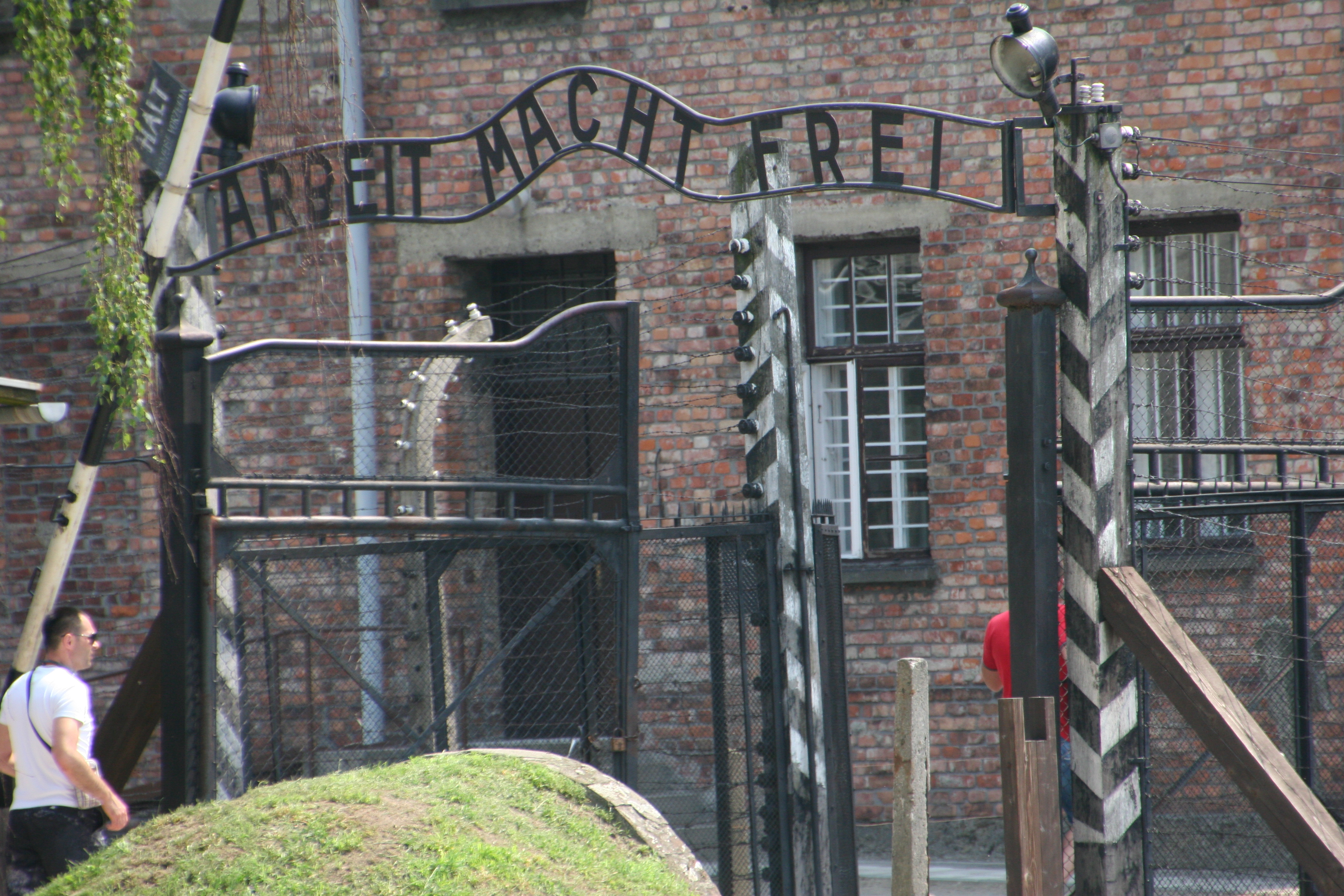
Arbeit Macht Frei – the infamous gate at the entrance to the camp
Birkenau, a separate camp a few miles away, was built specifically as a death camp and the ruins remain of the two large crematoriums housed there. A replica of the train cars used to transport Jews to the camp is sitting on the rail siding on the site, serving now as a memorial to the dead with its requisite flowers and stones. (Jews often place stones on graves or tombstones. The most common explanation for this is that placing stones is a symbolic act that indicates someone has come to visit and the deceased has not been forgotten. http://www.jewishvirtuallibrary.org/jsource/Judaism/graves.html)

Model of the rail cars used to transport Jews to Birkenau and other death camps
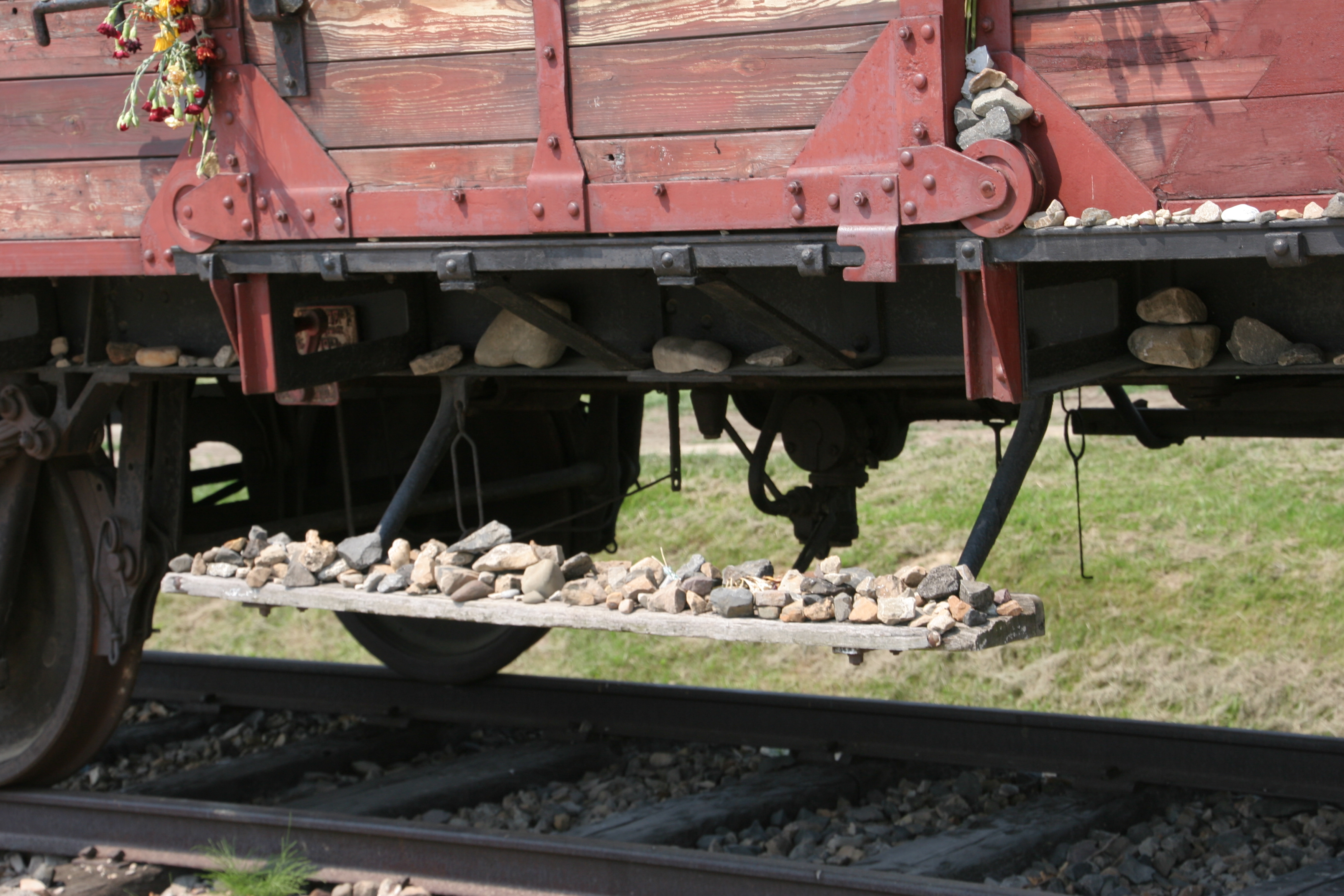
Stones commemmorate those who died at the camp
The unfortunate part of the tour was the pace and the number of people. Because Auschwitz 1 is essentially a museum, featuring various exhibits, and because you go through with a group of roughly 20 people among multiple similarly sized groups, there isn’t enough time to really stop and pause at each exhibit. You need to keep moving in order to stay with your tour guide and on pace for the tour. Auschwitz 1 is roughly 2 hours and the tour through Birkenau is one hour; I would have preferred to be able to take my own pace through, in order to better reflect on all that was around me and to take better pictures. But the number of visitors has increased considerably over the last year or two and so this is how they deal with the increase.
Seeing the camp where Dr. Mengele conducted his terrible experiments on twins; examining the barracks where 6-8 people shared each bunk, stacked 3-high and sleeping only on straw while suffering the horrible realities of what happened when a prisoner sick with dysentery slept on the bunk above; visiting the camp bathrooms, large public rooms without any of the smallest comfort items (toilet paper or privacy); and seeing how efficiently the Germans could “exterminate” thousands of people at a time, all at the mere nod of a German official making the “selection”; all these things reinforced for me the horrors of what the Nazi’s did. And it continues to reinforce for me the sheer idiocy of anyone who dares to compare their political opponents to anyone or any act from the Nazi era. There is no comparison, and those who make such statements are only showing their ignorance. Auschwitz -Birkenau helps confirm the facts of the matter.
Categories: Uncategorized
 My Take, By Tamara
You make an exceptionally important point about the misuses of comparison.